
At a Glance
Value in Steiner Ranch is driven by section-specific patterns rather than broad Austin averages.
Overpaying often happens when buyers fail to distinguish between cosmetic updates and structural maintenance.
Inventory levels and recent comparable sales within your specific pocket provide the most accurate pricing guardrails.
Floor plan functionality and lot usability (flat yards vs. sloped) significantly impact long-term resale value.
One of the most frequent concerns I hear from buyers moving into Steiner Ranch—whether they are coming from central Austin or relocating from out of state—is the fear of overpaying. In a neighborhood with over 4,000 homes, prices can vary by hundreds of thousands of dollars even on the same street. This leads many to wonder if the price on the listing truly reflects the market value or if they are stepping into a peak that won't hold.
Determining whether a home is priced fairly in Steiner Ranch requires looking past the granite countertops and the pool. It requires an understanding of how the neighborhood breathes, how the different sections compete against one another, and what buyers actually reward when it comes time for you to sell later. After walking hundreds of these homes and seeing which ones sit and which ones sell, I’ve noticed that "overpaying" is rarely about the list price itself—it is about the comparison between the home’s condition, its location within the neighborhood, and the current inventory.
Why Do Prices Vary So Much Between Steiner Ranch Sections?
To understand if you are overpaying, you first have to understand that Steiner Ranch is not a monolith. It is a collection of micro-markets. A home in the central "original" side of Steiner, such as Canyon Glen or Towne Hollow, is valued differently than a home in the newer, gated sections like Lakewood Hills or the high-elevation pockets of The Bluffs.
When buyers look at broad data from the Travis Central Appraisal District (TCAD), they often see a range that doesn't account for these nuances. For example, a home in a section zoned for River Ridge Elementary may command a different price point than one zoned for Laura Welch Bush Elementary, simply based on the current buyer demand for those specific school boundaries.
Overpaying often happens when a buyer applies the price-per-square-foot of a view lot in Sierra Vista to a home in a standard interior section. If you are looking at a home, you must compare it only to its direct competitors within similar sections. If you find yourself paying a "view premium" for a home that only has a partial peek of the canyon, you are likely overpaying.
How Do I Evaluate the Condition vs. the Asking Price?
In my experience, Steiner Ranch buyers are increasingly sensitive to maintenance. We have a wide range of home ages here, from the 1990s to the mid-2010s. A common trap is falling in love with a home that has "designer" finishes—modern paint, new light fixtures, and LVP flooring—while overlooking the age of the major systems.
If a home is priced at the top of its section’s range because of cosmetic updates, but it still has its original HVAC units from 2005 and a roof nearing the end of its life, you may be overpaying. I often tell my clients that buyers in this neighborhood reward a home that has been cared for more than a home that has some basic cosmetic updates to sell.
When evaluating a price, ask:
Are the windows original, and do they show signs of seal failure?
Has the irrigation system been maintained for the Steiner Ranch climate?
Are the updates cohesive throughout the home, or were they done piece-meal?
A home that feels "pieced together" with different flooring in every room rarely holds the same value as one with a consistent, thoughtful flow. If you are paying a premium for a home that will require you to replace major systems within twenty-four months, you are essentially paying for those upgrades twice.
Does the Floor Plan Support the Price Tag?
In Steiner Ranch, the floor plan is often more important than the square footage. Because many families move here specifically for the LISD schools and the community lifestyle, they look for specific layouts.
Homes that offer a dedicated home office, a primary suite on the main floor, and a secondary living space or "bonus room" are the gold standard. If you are looking at a home that is 3,500 square feet but has an awkward, "choppy" layout or a kitchen that feels isolated from the living area, it should not command the same price as a modern, open-concept plan of the same size.
I have seen buyers overpay for square footage they can't actually use. If a home has large, vaulted ceilings that look great in photos but create noise issues and high utility bills without adding functional living space, make sure you aren't paying the same price as you would for a more usable layout.
How Important is the Backyard to the Home's Value?
One of the most unique aspects of Steiner Ranch is the topography. We live in the Hill Country, which means we have a lot of slopes. A flat, usable backyard is a rare and highly valued commodity in this neighborhood.
If you are looking at two homes in a section like Bella Mar, and one has a flat yard where you can actually kick a soccer ball while the other is a steep drop-off with a small deck, the price should reflect that. Buyers often overpay when they don't realize how much the "usability" of the lot affects resale.
When I walk homes with buyers, we look at:
Privacy: Are you staring directly into a neighbor's window?
Noise: Is there significant road noise from Quinlan?
Sun Exposure: Does the backyard get scorched by the afternoon sun, making it unusable in the summer?
A home on a quiet cul-de-sac with a private, flat yard will always justify a higher price than a similar home on a busy through-street. If the home you are considering is on a noisy street but is priced like the quiet cul-de-sac home next door, you are likely overpaying.
How to Use Recent Sales Data to Your Advantage
The most common way people overpay is by looking at "Active" listings rather than "Sold" data. In a shifting market, sellers can list their homes for whatever they wish, but that doesn't mean the market will support it.
I look at the last six months of sales within the specific section of Steiner Ranch we are targeting. However, I also look at the days on market. If a home sold in three days, the price likely met the perception of the market. If you are using that as your only "comp," but the home you are looking at has been sitting for forty days, you have leverage.
Local Insight: What I See Every Week in Steiner Ranch
Working in this neighborhood daily, I see a recurring pattern with out-of-state relocation buyers. They often come from markets like California or Seattle where $1 million buys very little. When they see a 4,000-square-foot home in Steiner Ranch for $1.1 million, it feels like a bargain to them.
Because of this, they are often willing to pay full price without questioning the micro-market nuances. This can "artificially" inflate the perceived value of a street. You've got to be careful of outlier sales as comps. If you are a local buyer, you have to be careful not to get caught in the wake of a relocation buyer’s budget.
I also notice that homes near the community centers—like the John Simpson Park or the Bella Mar community center—hold their value remarkably well. Even if the home needs a little work, the proximity to the pools and tennis courts provides a floor for the value. If you are buying far from the amenities, ensure the price reflects that lack of convenience.
Common Questions About Steiner Ranch Home Values
Is the Steiner Ranch market overpriced compared to the rest of Austin?
Steiner Ranch maintains its value better than many other Austin suburbs because it is "landlocked." There is no more room to build new phases, which means supply is capped. While prices are higher than in some outlying areas, the proximity to Lake Austin and the quality of the LISD schools create a sustained demand that supports these values.
Should I pay more for a home with a pool?
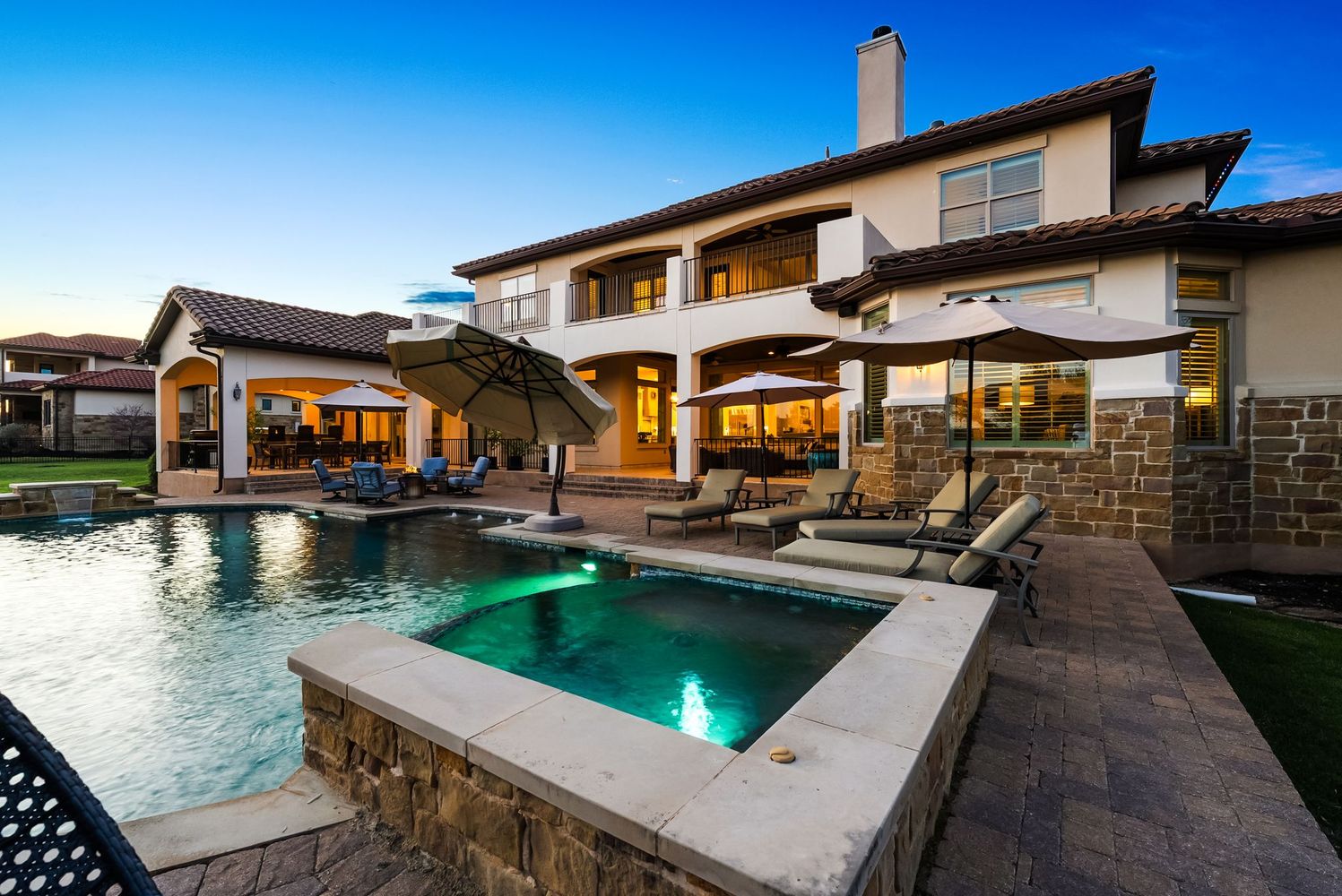
In Steiner Ranch, a pool typically adds value, but rarely as much as it cost to build. If a seller is asking for a $150,000 premium because they put in a pool last year, you are likely overpaying. You should expect to pay a fair market premium for the convenience of having a pool already installed, but not the full construction cost.
How do I know if a "view" is worth the extra cost?
A true canyon or lake view in Steiner Ranch is a premium feature. However, the value of that view depends on its "permanence." If the view is over a neighbor's lot that could eventually be built upon or have trees grow to block it, the premium should be lower. A permanent greenbelt or Lake Austin view is one of the few things worth a significant price jump.
Does the age of the home matter if it has been remodeled?
Yes. A remodeled 1995 home still has 1995 plumbing and electrical systems. While the aesthetic is modern, the "bones" are older. You should not pay the same price for a remodeled 1990s home as you would for a 2015 home in a newer section like Lakewood Hills, as the newer home will generally have higher energy efficiency and more modern building standards.
Finding the Balance Between Price and Value
Ultimately, a home is worth what you are willing to pay for it, but you never want to be in a position where you are "underwater" the moment you close. Knowing you haven't overpaid comes down to doing the boring work: looking at the maintenance records, studying the section-specific comps, and understanding the trade-offs of the lot and floor plan.
In Steiner Ranch, the best way to avoid overpaying is to start the conversation early. Whether you are months away from buying or ready to make an offer this weekend, having a clear-eyed view of what truly drives value in this neighborhood will save you a significant amount of stress—and money—in the long run. If you want to walk through the data for a specific section or get a second opinion on a home you’re eyeing, I’m always here to help you look at the patterns.
#steinerranch
Check out this article next